
Sitting Down with Author Jeanine DeHoney
ABOUT THE AUTHOR
Jeanine DeHoney’s new book, This Sunday My Daddy Came to Church, is a natural outgrowth of her perennial love for family and children. A prolific writer, she has been published in the Chicken Soup for the Soul series, including Chicken Soup for the African American Woman’s Soul. Her children’s stories have been published in Skipping Stones, Devozine, and other publications. Jeanine is a former art enrichment teacher and family services coordinator at a preschool learning center in Brooklyn, New York. She tells KIZA, “I write because it is my heartbeat. It is my healer and helps me catch my breath and exhale as I have my say. Whether I am writing fiction or nonfiction or for adults or children, I always hope that my writing will heal, affirm and change others.”
NJEMILE
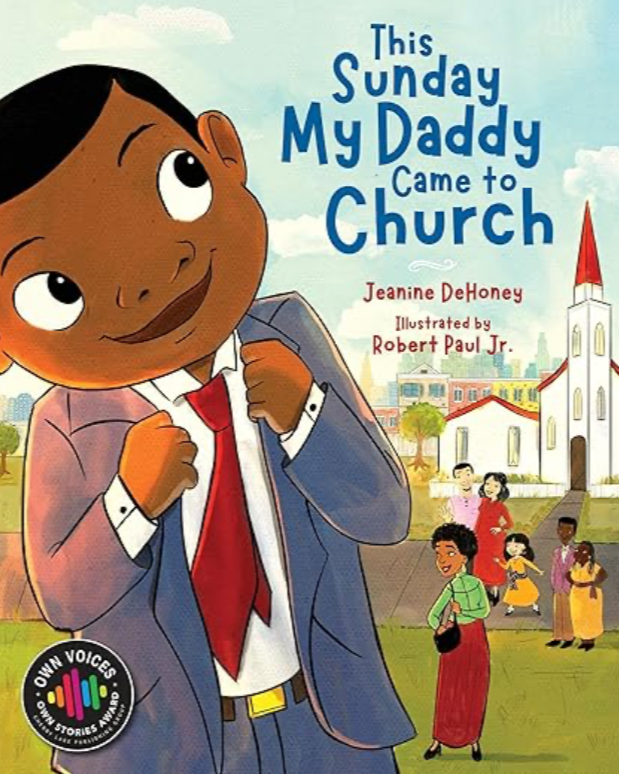
(Growling) I don't need the AI companion! Okay. (Calmly) All right, so, here we are today. I’m interviewing Jeanine DeHoney, the author of This Sunday My Daddy Came to Church, her debut children’s publication. The book is an honor winner in Sleeping Bear Press’ Own Voices, Own Stories collection. Congratulations! Thank you so much for offering to appear again in KIZA BlackLit. Your first appearance was, what about a year ago?
JEANINE
Almost, yes. With Spike Lee’s story.
NJEMILE
Right, “Spike Lee’s Crooklyn was my Brooklyn.” That was the name of your article. And you really got me. I could feel it, I could see it, I was there. I was weaving between his movie and your story … it was great.
JEANINE
Oh yeah, that is one of my favorite movies. I could watch it ten times in a week and never get tired of it.
NJEMILE
So, yeah, I hope he heard that, because you really did him well and he was our Black hero for that issue. So, back to today: congratulations on the publication of your book.
JEANINE
Thank you so much. Like I said, it was a long-held dream. I worked in early childhood—daycare at first, as an assistant teacher, then I did an art enrichment program there, then I became a family services coordinator, so, I was working with children and also having my own. When they were young, I always wanted to write a picture book. I never had any luck. I would send something out, probably every week. I came close one time, when I had written something for McDonald’s and I sent it to the head of—I forgot what publication she represented, and she enjoyed it, but then she wasn’t able to accept it. So, I came close, but never got this.
And then when I saw that they had a contest for the Own Voices, Own Story competition. I said, Okay, let me enter it. This story, I think probably had been in my head for maybe a year or so. I wrote it, polished it off and sent it in. I’m not quite sure of the timeline, but probably over six months or so later, I received an email, saying, “You were accepted as an honor award winner.” My granddaughters were downstairs because they had a blow-up bed and they spent the night. I ran downstairs, screaming to them.
NJEMILE
How old were they at that time?
JEANINE
Let's see, the oldest is now 16. So, they were around 14 and 13. Okay. Yeah, yeah. And then after that, it took a process to see whether or not they were going to published it. Finally, I got that email, and so that was another screaming session.
NJEMILE
Did you ever consider self publishing?
JEANINE
I thought about it but I really didn't have the funds for that and I always wanted to go the traditional route. You know, some people can really work it and do all the marketing and so forth. Really, my plate was full already. I didn't really want to go the self-publishing route.
NJEMILE
Well, that's good. It really wasn’t a long time, because a year going after the publishing industry is a short amount of time.
JEANINE
Right, right. Yes.
NJEMILE
You also wrote for the Chicken Soup for the Soul series, right?
JEANINE
Yes, I did maybe four or five books for them. When I was probably in my thirties, I said that I was going after 100 publications. I don’t know if I’ve quite made it; I haven't counted it yet, but I said, I'm going to get in 100 publications. That was my goal.
NJEMILE
What a great goal.
JEANINE
Yeah. So, I’d just put it out. A lot of it, I would get an idea and I’d just put it out. Like with this book, I always say, Write from the heart. Sometimes, you know, a lot of people think I might not need to tell my story, that it divulges too much. But you know, I always think it’s going to help someone else.
NJEMILE
Absolutely, it begins with our story. In addition to running Next Level Publications Group, and KIZA BlackLit, I'm working at the local University in the Writing Center. It’s really great. But, you know, literacy is an endangered art. It's an endangered skill and art, at least the way we perceive it.
Yes, it’s important, I think, to maintain the art. We talked about sometimes that, when new Industries, new technologies come along, there are folks who always say we're going to lose something in the process. In fact, we do lose something, and we gain other things, but there's also a loss.
For example, with the advent of books came a loss of memory. People used to be able to hold onto whole encyclopedic levels of information, knowing the Quran from cover to cover, or the Torah or whatever it is they were attached to, that they actually committed to memory. We lost that capacity to a large degree, and now, one of our biggest problems is Alzheimer's. So, it’s a continuation of the loss of memory.
JEANINE
Yes, it is.
NJEMILE
In this case, it’s a loss of literacy with the advent of AI and with the advent of information at your fingertips, before AI became popular. I appreciate the fact that you are writing and, that you are helping us maintain this level of literacy for our children, especially something that is their story. That’s one of the places where young people can begin to learn, by first being able to tell their story and then being able to write the story.
JEANINE
That's also something that, even when I was teaching the young students, they always had to write anything that was going on—even the ones that couldn't write. Okay, you can draw about it. Also, talking about the lost art, there is also letter writing. I wrote an essay a long time ago about the “Lost Art of Letter Writing.” I got into that because I had found my grandmother's letters to my grandfather, when he was in the service, and she called him Husband Man. He died after an illness, and that was the first love letter that I saw from that time. So, I was always interested in letters, and that’s something our children, really don't know about, because you can email, etcetera. We forgot the beauty of love letters.
NJEMILE
The absolute beauty of love letters. Have you done exercises with children doing that, writing letters?
JEANINE
When I was working in daycare, it was, “Write a letter to your mom or your dad or your grandma.” I was always trying to find something to connect them, especially to the elders. You had a lot of grandparents who were taking care of their grandchildren, due to substance abuse, etcetera, of their child. I was always really endeared to the elders, so I would always try to do anything to lift their spirits up.
NJEMILE
So that brings me to two of the questions that I have for you. I wasn't sure if you consider Sunday My Daddy Came to Church a children's book? Because you're talking about celebrating the bonds of family and faith, and that can be for anybody. So, do you actually consider it to be a children's book?
JEANINE
I really consider it a family book. Because a lot of it is also based on my mother and father with the jazz music. My father used to play the saxophone, so I grew up thinking that his saxophone case was like the richest thing. I grew up in the projects, and I saw his gold pen, and I was like, “We’re rich!” I used to go to church with my mother. My father didn’t really go, but I always knew he was religious. I saw that he wore the rosary and he prayed and other things. Like in the book, it mentions about how, even if he doesn't worship in a building, helping a neighbor—these were ways to also show that you believe in God by helping others, being of service to others. Like I said, it's also a family book, because I think everyone could smile from it.
My editor says when she reads it, she cries. Her father was a minister and she was the one that really pushed to have the book published, because she said it just brought back so many memories for her.
NJEMILE
Fabulous. And the other question was about celebrating the bonds of family and faith. You've already talked about the importance of those bonds and how they became significant and central in your life. You saw this drama unfold in your childhood, and you make it available to folks. The lesson about the different ways to worship is really important. Because a lot of times people think that, if you don't believe the way that they believe, you are about to get struck by lightning and they want to move across the room. They really don't know that there are other ways to worship, and other names to worship.
JEANINE
Yeah, because when I was young, I went to church just about every Sunday. We would go take the bus to my grandmother's house. She lived in Bedford Stuyvesant and we could walk to the church from her house. She lived in a tenement apartment. As I got older and had my own family, we stopped going to church. I've always been one of service. I love to give. You can call me Mrs. Santa Claus all year. I would be like, this person will like this, etcetera. I've always been one to serve that way—by giving. I’d read something on Go Fund Me or on the news. It's like, Okay, how can I contribute to this fund? So, that's how I try to live my life.
NJEMILE
That sounds wonderful. We know that Daddy in your story takes some characteristics from your father. What about Omar? Does Omar remind you of somebody?
JEANINE
Basically, Omar is me in a way, just a different gender. But I wanted to show an African American son and father, because you see so many stories about them not being together and close, and I just wanted to show that bond. We hear so much negative about fathers and sons. In a lot of my stories, I tend to show the love between a father and son. Because, you listen to the media and fathers are not there and the sons are involved in such and such, and so I just wanted to show that bond.
NJEMILE
And I appreciate it, I really do. You talked about your father saying, "listen with your heart," and you took that to heart in your writing as well. I can bear witness that you did that with Crooklyn. And I'm sure that, with this book, all the ages will get the same heart.
JEANINE
Yes, yes, thank you. That's what I was trying to convey.
NJEMILE
How do you actualize or practice listening and writing with your heart? How does that work for you? Because, you know, writing is not always easy. So, how can you help other writers connect with their heart, and know how to do that? Or whatever art that person is practicing?
JEANINE
Whatever you’re most passionate about, whatever is like tugging on you. And you say, okay, I can't go to sleep. I can't eat. I can't do anything until I get this out. That's how I am. A lot of times when I write, I won't even eat. I have this urge that I have to sit down and get this out. Then after I get it out, it's like, okay, now I get to have my bacon, egg and cheese or whatever. And a lot has been tugging on me for the last couple of years.
NJEMILE
Are you writing it? Are you getting it out?
JEANINE
Yes. I write a lot about things that have gone on in my family. Not all of them are good things. I write about problems, like when my children were younger, when they had issues. I write about family problems, even marital problems. But I always try to get to that happy ending, where there's hope. I always try to leave my stories with an ending that shows you can get through, even if you have to get counseling or seek out resources. I wrote about my aunt who had a drinking problem. She was just the sweetest. It was always about getting help and not being quiet and ashamed about certain things. Because, if you're ashamed about your life, you can't help find the solutions to resolution.
NJEMILE
Where can we see some of these other writings of yours?
JEANINE
If you Google my name, everything will come up. One of my proudest articles was in Essence. I wrote about the gap in my teeth. That was years ago. I was so pleased because, in the next issue, where they have the comments, I had more comments than Nelson Mandela's wife, Winnie Mandela!
NJEMILE
Wow! That’s amazing!
JEANINE
I have articles in Literary Mother Magazine, and recently I had a story published on Substack, where they had a One Room, One Hour challenge. We had to spend an hour in one room and write about our feelings. I wrote a story called The Piano Room, because we have a piano in the house, that the former owners left and asked if we wanted to keep it. We kept it and never played it, so I wanted to write about that. I have a lot of articles. Like I said, I should be nearing that 100.
NJEMILE
That’s fabulous. When did you first realize that you are a writer?
JEANINE
Oh, I love telling this story, because I was seven years old. I remember—seven years old. My mother was one who always had notebooks in the house, not just for school, but just for my sister and me. My mother would give me a notebook and I would just fold my legs and sit and write, mostly about cats. Yes, I used to love cats back then. At seven, I remember wanting to be a writer. I remember telling a relative that I was going to be a writer. That relative, unfortunately, laughed and said, “Oh well, you'll never make any money from that, and you should do something else." I was sort of like, uh-uh, that's not going to be the case.
NJEMILE
I'm so glad.
JEANINE
I said, “No, I'm going to be a writer," and I never veered from that.
NJEMILE
That’s so good. Yeah, cause, see, response is so important. Because a lot of times, someone can help diminish your dream, in their effort to help you be more practical. Sometimes it's more devious why people say what they say, but the response is so important. You responded in your own power and that shows some really great agency that was nurtured in you.
JEANINE
Yeah, yeah. I talk to children a lot about dreams. I guess, some people may say I have my head up in the air or whatever, and I'm not really thinking realistically. But I always say dreams can come true. I’ve been saying that to young children, older children, anyone. Don't give up on your dreams. Unfortunately, where I grew up, in Brownsville, East New York, a lot of people didn't believe in dreams, because they were so busy struggling to make ends meet. So, they never told their children, "Okay, you can do this, you can do that. It was like, okay, you have to hurry up and get a job or, you know, it's hard out there.” Of course, it is difficult, but you can still realize those dreams. You just have to have faith and keep going at it—like with a chisel—just keep breaking bits and bits.
NJEMILE
Yeah. I started to realize recently, as I got more into news from Africa and seeing some of the way folks live—not that everyone is living in difficult conditions. A lot of folks may think that it's all village life in Africa. It is about 70% village life--which is a good thing, I think. In many cases, they would like to have more infrastructure coming to the villages. But in the midst of not having the infrastructure, I watched some folks from Chad and the way they dealt. They were riding a bus. Well, not a bus, a truck that was picking up people. There were about 20 people on that truck. The roads were .... And Chad, even though it's in the Sahel—the area between the Sahara and the forest line—it floods! And so, they were going through flooded roads with 20 people bouncing around on a truck ... like yeah.
They went through so many challenges to get these people to the market because that was their income for the week. And the driver just wouldn't stop. Every time something happened, he handled it, and everybody on the bus helped. So, the resilience that they demonstrated showed me that we have a lot more than we’re aware that we have, and we take some things for granted. Like roads and lights and bathrooms, you know? Yeah.
JEANINE
It’s in our ancestry. Look at what our ancestors overcame, what they had to go through day by day. So, when you look at your life, you might say, “Oh, I'm stuck in traffic or whatever.” It’s nothing compared to what they went through.
NJEMILE
Right, and what folks are still going through you. I don’t want to diminish what we have to deal with here.
JEANINE
Right, right.
NJEMILE
Not to diminish that at all. Because it takes some work and we show that resilience as well. It’s also good to know that we have a lot, and that we can do more with what we have, and that we can share more of what we have.
JEANINE
Yes.
NJEMILE
We touched on this before. How do you suggest that we keep the art of reading and writing, being something that sparkles for young people in this age?
JEANINE
Well, always have a library in your house. Gather books, go to thrift stores, go to whatever bookstore is in your neighborhood. If there's none, create one with your neighbors and discuss books with your children. Turn the TV off and discuss books and give them paper to write about their ideas. My thing is, always have paper in every room, a notebook in every room.
NJEMILE
Paper in every room! I like it!
JEANINE
In my kitchen, you'll find it in the bedrooms, even in the living room, there's a pad of paper to jot things down. Okay, you even if you're writing a list. Now, my mother, which I sort of think this influenced me to write. My mother was a list-maker. She would write lists of everything, not just grocery lists—her favorite television shows, her favorite actors—she always had Sidney Poitier at the top. She would always make lists. When she was in the hospital, she hadn't been writing. She passed from chronic heart disease.
I had brought her notebook when she was very sick and I just left it on her desk, just in case. And I found that she had written a list of our names—my sister and her and me—and she put down my aunt's name, which was her only living sister. I think I still have it. She was a list maker, and I truly think that that was what got me into writing also. Because when I was little, I was always under her. So, seeing her write those lists, of course I wanted to do the same thing. I think when my sons and daughters were probably around six months, I gave them a pen and paper and just let them do their thing.
We just have to discuss more books and have more books and have more paper and tell them that their story counts, their voice counts and hopefully, even if they never become an author, at least they'll know, “When I want to, I can write down my story, my truth.
NJEMILE
Yeah. And they can do it effectively. When I say effectively, I mean, knowing the structure of the language, right, of the English language. In our last issue of KIZA BlackLit, we had an article from a sister that was written back in 1997 initially and we reprinted it, but the information is just as fresh. She’s talking about Black English. The title is, "Black English/Ebonics: What It Be Like?" Oh, it's so scholarly and rings so true. She breaks down and analyzes what Black English is. It’s also called African American vernacular English. It’s about being able to write effectively in both languages, understanding that we are bilingual, at least. But folks probably speak at least three languages.
JEANINE
I had an honorable mention in Gemini Literary Magazine for a poem. I really never wrote poems, but there were two that I wrote the first time and both of them won something. This one basically was a poem in Ebonics. It was about dancing, and I used the language I grew up hearing. They said that they were very pleased, because it just showed how our culture is. But yeah, we can switch back and forth and do it so easily.
NJEMILE
Yes, so easily. Those three languages: we speak what's called Standard English, Black Vernacular English and slang/pop-street talk. You know, the entertainment lingo.
JEANINE
Yeah. And in addition to jazz being one of my favorite music genres, I love hip-hop also ... the nice ones.
LAUGHTER
JEANINE
You know, my kids grew up—my sons, especially, would be listening to hip hop. So, I was always into it. They had the cool mom.
NJEMILE
Well, it’s very cool having you here. Actually, to be truthful, I'm going back and forth between the next issue, and I have already put out there the theme is “Me." I'm going back and forth between Me and Legacy, because I'm thinking that, in the wintertime, we kind of settled into me. But in the fall, it’s go-time, it's legs out. Whatever it is that I'm doing, y’aamean, whatever I been doing, I’m harvesting. You know? Ordinarily, I'm not falling back yet.
JEANINE
Excellent.
NJEMILE
I think your story straddles that because it talks about the inner world of Omar's understanding, as well as what he has learned and the legacy that is being passed on to him. I think it fits in both areas. So, we'll see what this next issue is about—Me or Legacy, but we do know that This Sunday, My Daddy Came to Church will be part of the conversation.
JEANINE
I appreciate that, and I appreciate you. And also, I just wanted to mention about the illustrator, Robert Paul, Jr., because he truly brought the book to life.
NJEMILE
Yes, and we will have our interview with him in our next issue as well. I really appreciate having you here. I appreciate having your book in our next issue in. As I said, you're pushing me to another level of our good dream.
JEANINE
I must applaud you for that. Because anybody that I can push toward their dream. I want to be to be a support and tell the world about it. Your publication is something that we need.
NJEMILE
Let's talk a little bit about that “at 67 and 66” thing. Go ahead. Tell us about that.
JEANINE
I had written a piece about it called “trust in the timing.” I had sent it to someone at AARP but, unfortunately, they did not accept it. It was about how I had to trust in God's timing—that during this time, he was pruning me, giving me patience, helping me build my faith in the fact that when it was time, then it was time. Yeah. So, I had to learn how to be patient and trust the process. Because at first, I was getting frustrated. And I said, “Okay, I'm not gonna do the picture book, go that way anymore and, you know, they always say, when you're ready to give up—
NJEMILE
—there it is!
JEANINE
Right, yeah. And that's exactly what happened. Because I truly said, Okay, I've been doing this for over—oh God, 50-something years, and no luck at all with picture books. And I said, well, maybe it's not meant to be. And then, you know, I got a spark and, it was just a lesson. You know, you just have to trust in the timing and trust in God's timing, that things are falling into place as they should. Also, if it may have happened twenty years before, I was a different person. So, I might not have handled that kind of success the way I should have. It might not have been good for my family. A lot was going on then—like my mother, when she got sick— that threw me into another place. And so, there were certain things, I guess, that had to happen before this could happen.
NJEMILE
Absolutely. The timing is right. Again, it’s This Sunday My Daddy Came to Church, by Jeanine DeHoney. Where can we go to get it?
JEANINE
You can get it at Barnes & Nobles, Amazon, anywhere books are sold. I had just reached out to a place called Octavia's Bookstore in California, to see whether or not they would order the book and they did a big order, and plan to do another one. Look for me in a book feature for Successful Black Parenting magazine also. I'm working hard to get the word out, and you were the first one. You’ll always be--
NJEMILE
Yay!
JEANINE
--the one in my heart.
NJEMILE
Are you familiar with the African American literary book club? There’s so much information on that website. It’s a wonderful resource. Thank you again. Look forward to seeing it, and I will talk to you again very soon.
JEANINE
Thank you, and you have a wonderful, wonderful weekend and thank you so much for this interview. My first interview!
NJEMILE
It was great. I enjoyed chatting with you.
JEANINE
I did too. I enjoyed chatting with you, too.