
Love Like This
THE NEWEST INSTALLATION OF
For the Love of Literature
BY KHADIJA POUNSEL
COPYRIGHT 2026. ALL RIGHTS RESERVED.
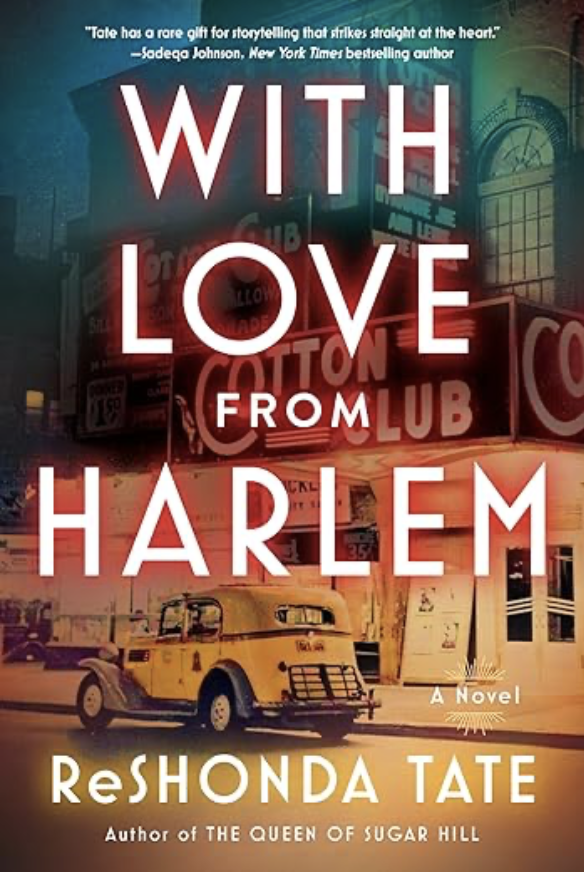
What do semantics, New York City and Black firsts have in common? Why, they are at the heart of my reading experience for this month’s KIZA BlackLit issue, which centers around resonance, emergence and new explorations. First, resonance brought to my mind music, then a question related to a popular word, Are resonance and resonate related semantically? If you are a returning reader, you already know where I went. And according to Merriam-Webster Dictionary, the answer is yes.
Resonate:
1) to produce or exhibit resonance, especially: to produce a loud, clear, deep, and continuous sound
2) to respond as if by resonance
3) to have particular meaning or importance: to affect or appeal to someone in a personal way
I love that kind of dig: a word, a puzzle, a question.
In the spirit of resonance, I selected a music-centered novel—author ReShonda Tate’s historical fiction, With Love from Harlem, about the fascinating life of the multi-faceted jazz musician and actress, Hazel Scott (also, the nation’s first Black woman to host her own network television series). “She wasn’t the first to jazz up the classics, but she was the first to do it like this—to blend them so seamlessly that you couldn’t tell where the classical ended and the jazz began” (pages 5-6).
In the spirit of new explorations, Tate’s is the first historical fiction I have covered in the column. As a lover of music, history and literature, the meeting of fact and fiction in the world of jazz made it an easy choice. Tate’s dive into figures, landmarks, and cultural iconography of the period showcased the gift of historical fiction to remember, to uncover and to imagine.
What emerged in the novel was a who’s who of 20th century Black American culture. The author introduced well-known musicians like Billie Holiday and Nina Simone; literary greats like Langston Hughes and James Baldwin and political luminaries like Scott’s own husband, Adam Clayton Powell, Jr. (also, the first Black man to represent New York in Congress). I was familiar with most of the novel’s supporting characters, including Scott’s collaborators Charles Mingus and Max Roach, yet ironically, had never heard of Scott herself, although she was well known in her time.
“She’d played to packed houses all over the country, but only New York knew how to love her like this. The ‘Hazel Scott Returns to Cafe Society’ sign pulsed in sync with the energetic crowd. As Hazel peeked out from behind the velvet partition, a surge of electricity coursed through her and danced along the edges of her nerves” (page 3).
Hazel’s response resonated deeply. Although there are other places for me: Denver—something about always having mountains in view; Nassau—looking at the Caribbean Sea never gets old; DC metro—its monuments and splendid blend of old and new will always have my heart. But to recharge, even if just for a day, it’s the Big Apple. As soon as my feet hit the street, that burst of energy—like no other. I love it, and it loves me back.
With all its glitz and glamour, movers and shakers, firsts and fights, this novel’s story felt relatable on many levels. How does one balance career aspirations and romance? How does a friend help a struggling friend with care and respect? How does an employer support a promising employee? How does a gifted, ambitious artist navigate an unmarked path? How does a charismatic, highly intelligent, socially conscious person maneuver politics? Add race, add gender, add war, add social unrest. What do you get? Life then, life now.
Maybe because I relish a good concert: small club, big arena, outdoor pavilion, I found myself smiling along with the cheering audiences in the story. Maybe because I get the tension: pushing for progress, cherishing community, personal ambition, I nodded my head many a time to Hazel and to Adam. Maybe because I understand location, I breathed differently based on where the characters found themselves: New York, DC, Hollywood, Paris. When I closed Tate’s With Love from Harlem and thought through the characters, whether I’d totally agreed with them or not, I found myself saying, “I understand.” Love like this, life then, life now.
Still loving literature,
Khadija Pounsel